
DEP – Cohort 3
The Kambria DAOs Framework (KDF)
Overview: What the Framework Does
The Kambria DAOs Framework is how the Circles DAO handles real money without doing it by hand. When the DAO earns revenue, the framework receives it, records it, splits it by a rule the DAO set in advance, and pays out what is owed — and every step is visible on-chain, so nobody has to take anyone's word for the numbers.
The whole framework is one path, repeated for every payment the DAO receives:
Receive → Categorise → Split → Pay out → Record
- Receive. Revenue arrives as USDT against a payment request, tagged to the DAO.
- Categorise. Each payment is labelled by type (for example, service or product), so reporting stays consistent.
- Split. A predefined, versioned rule divides the revenue into the DAO's pools — automatically, the same way every time.
- Pay out. Those owed are paid directly, with amounts computed by the framework, through the DAO's treasury.
- Record. Every receipt, split, and payout is logged on-chain and readable by anyone.
In this first live cohort, Kambria runs the paying-out steps as a managed process with manual checks (see Key Concepts & Roles).
Three contracts do this work behind the scenes. Members don't interact with them directly, but it helps to know the names:
| Contract | What it does |
|---|---|
| Revenue Vault | The DAO's receiving account. Revenue arrives here, tagged to the DAO, in USDT. |
| Revenue Splitter | Applies the DAO's split rule to work out who gets what for a given cycle. |
| Payout Executor | Sends the computed payouts out, in one controlled action, with a log. |
Everything runs on Polygon, and in DEP 3 the framework works in USDT only. The DAO's treasury is an XDAO multisig — the DAO's own governed account (how spending is authorised in this cohort, and where it's headed, is covered under Key Concepts & Roles and Paying Contributors & Operating Costs).
Key Concepts & Roles
A few terms recur throughout this guide. This page defines them once.
The vocabulary
| Term | What it means |
|---|---|
| DAO Treasury | The DAO's XDAO multisig wallet, which holds the DAO's funds. Longer term, it is the account that authorises splits and payouts (see *Categorisation & Revenue Split*, *Transparency & Reconciliation*). |
| Revenue Vault | The DAO's on-chain receiving account, where revenue lands before it is split. |
| Payment Request | A request the DAO creates for a specific amount, which a customer pays. It carries the vault address, the amount, and a human-readable reference. |
| Revenue Category | The type a payment is tagged as (for example, service or product), chosen from a set list so reporting is consistent. |
| Split Configuration | The DAO's rule for dividing revenue among its pools. Set in advance, versioned, and applied automatically. |
| Pool | A destination a share of revenue goes to — for example the Treasury, or the contributors who did the work (see *Paying Contributors & Operating Costs*). |
| Cycle | A period (weekly or monthly) over which revenue is gathered and then split and paid out together. |
| Payout | The transfer of what is owed, computed by the framework and executed through the treasury. |
| KAT / GT / LP | The recognition and ownership tokens used in DEP 3. KAT records contribution and standing (see *KAT in DEP 3*). GT is the DAO's own governance token, used for voting in XDAO. LP represents fund contribution — one form a revenue pool can pay to (see *Paying Contributors & Operating Costs**)*. |
Roles in DEP 3
The framework organises its permissions into four roles. One person can hold more than one role, so these describe what a role can do, not how many people are involved. Each role is granted separately: holding one doesn't give you another.
| Role | What this role does |
|---|---|
| Order Handler | Creates Payment Requests for the orders they handle, adds or removes co-handlers on those orders, and marks an order completed once it's delivered. Any approved DAO member can act as Order Handler. |
| Operator | Runs the money rounds. Closes revenue cycles, and for Microjob creates the cycle, imports the jobs (a file or the platform's session log), submits the cycle for review, and executes it on-chain once an Organizer has approved it. The Operator can see task rates but can't change them. |
| Organizer | Sets up and oversees the DAO in the framework. Configures the DAO's settings (split rules, revenue categories, LP treatment and so on), manages its members, and approves or rejects each Microjob cycle before it is executed. |
| Admin | Holds the framework's highest permissions: enters and updates task rates, and grants or removes the Operator role. In DEP 3, Kambria holds the Admin role. |
Because this is the framework's first live cohort, Kambria currently runs the paying-out steps — distributions and Microjob payments — as a managed process, with manual checks. The one exception is a DAO's operating costs, which are released by a DAO vote (see Paying Contributors & Operating Costs). So for now the roles above prepare the work, and Kambria runs the actual movement of money alongside them while the framework proves itself.
Longer term, these actions are designed to be authorised by the DAO itself: prepared by a role, then approved by the DAO's signers on its XDAO multisig treasury — so authority sits with the DAO rather than any one person. DEP 3 is the run that gets the framework ready for that.
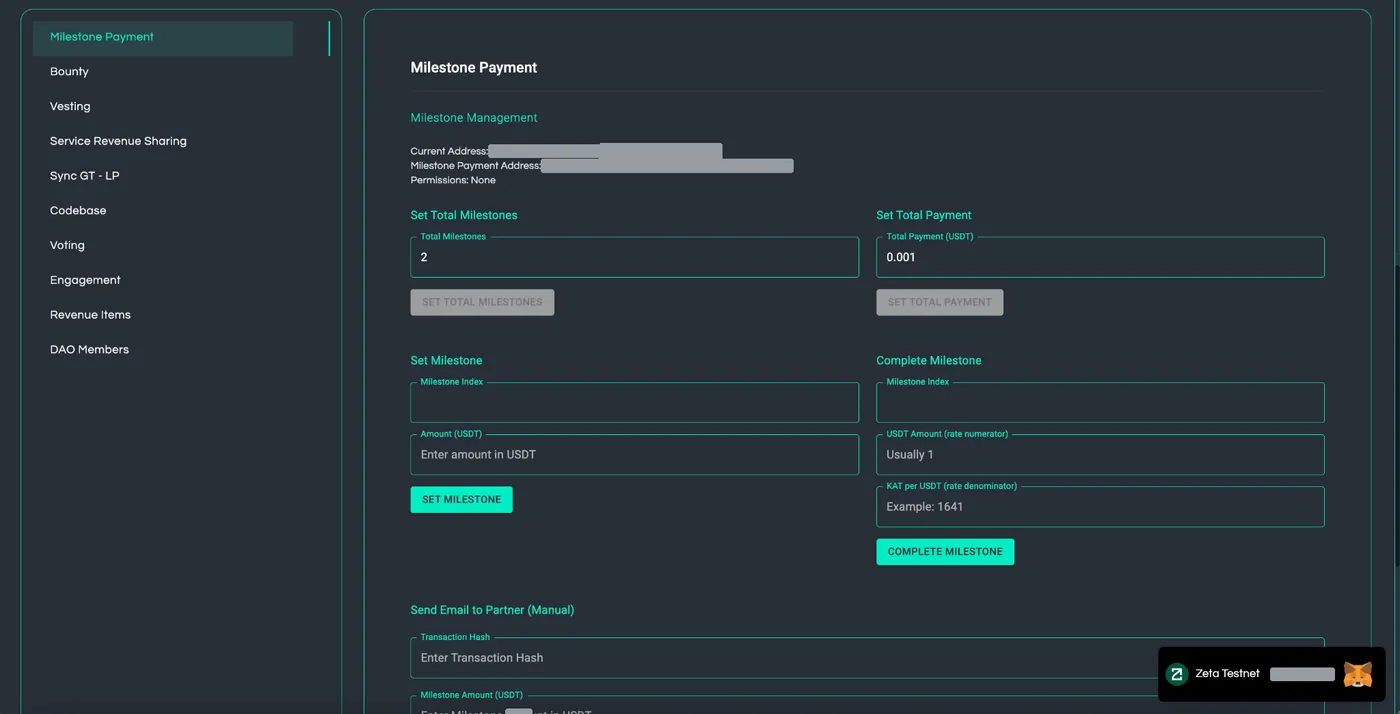
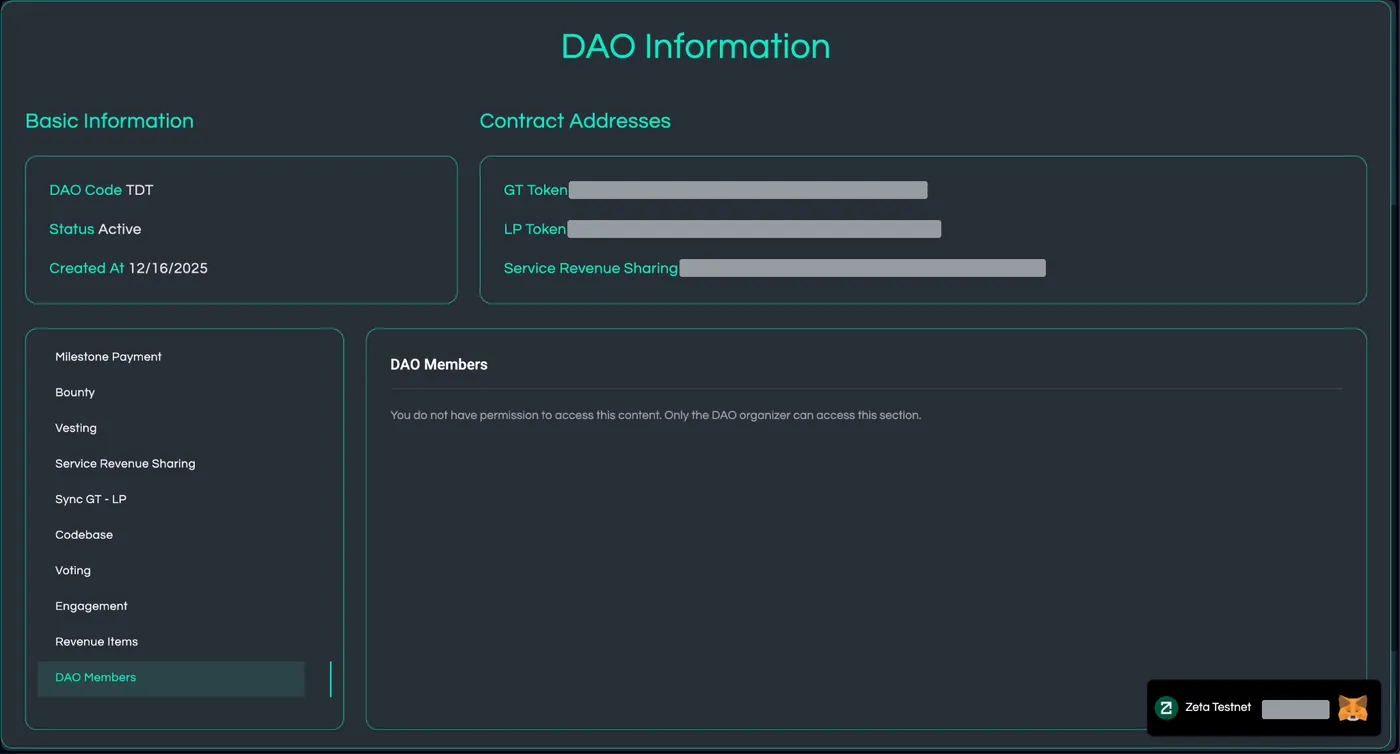
DAO Organizer: 1. Milestone Payment (full permission)
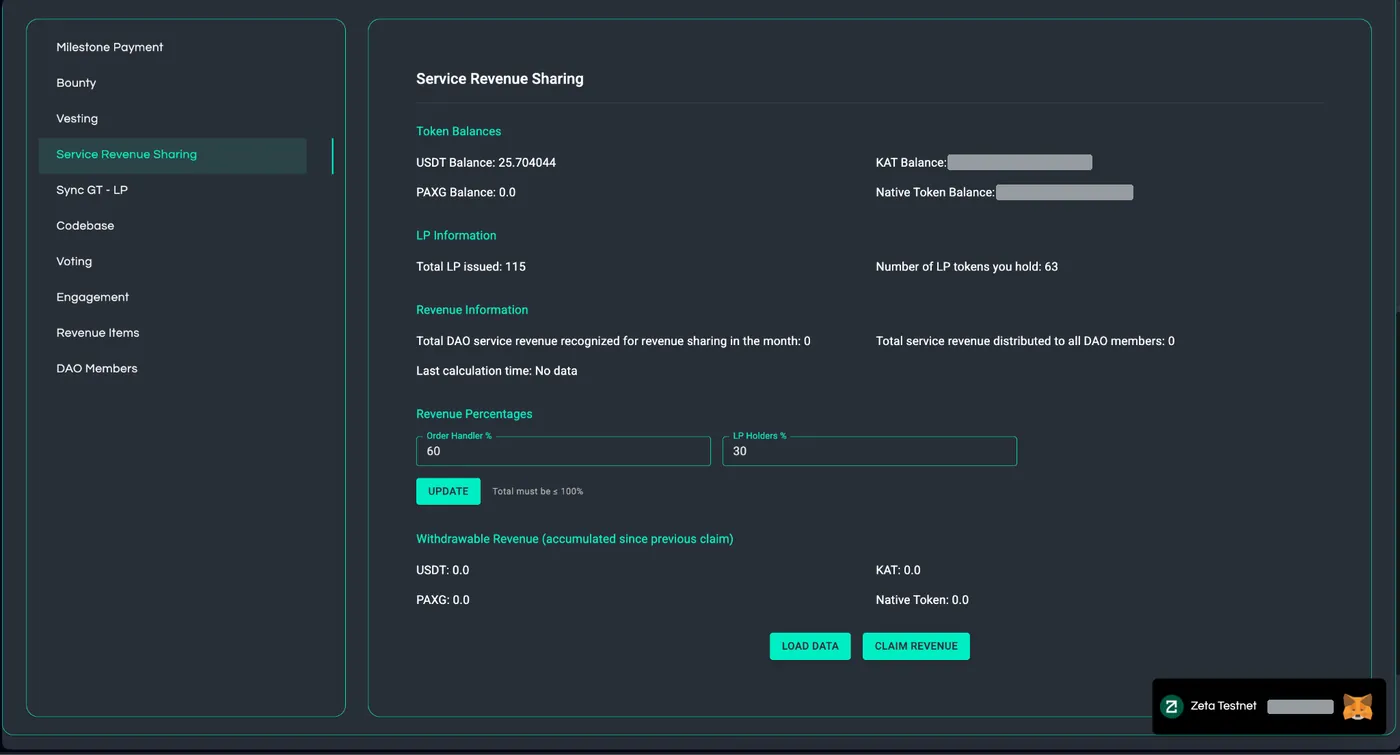
2. Service Revenue Sharing (full permission)
3. Revenue Item (full permission)
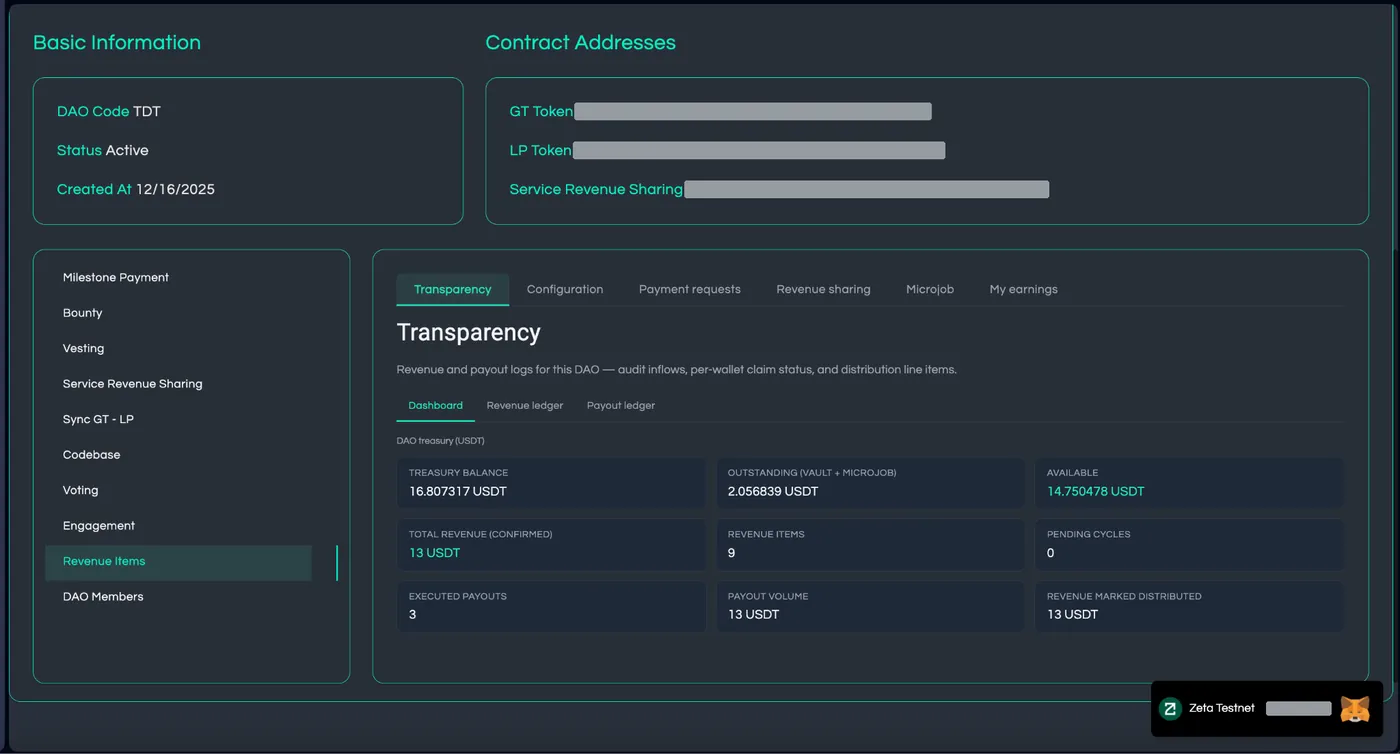
Transparency
Configuration
Payment requests
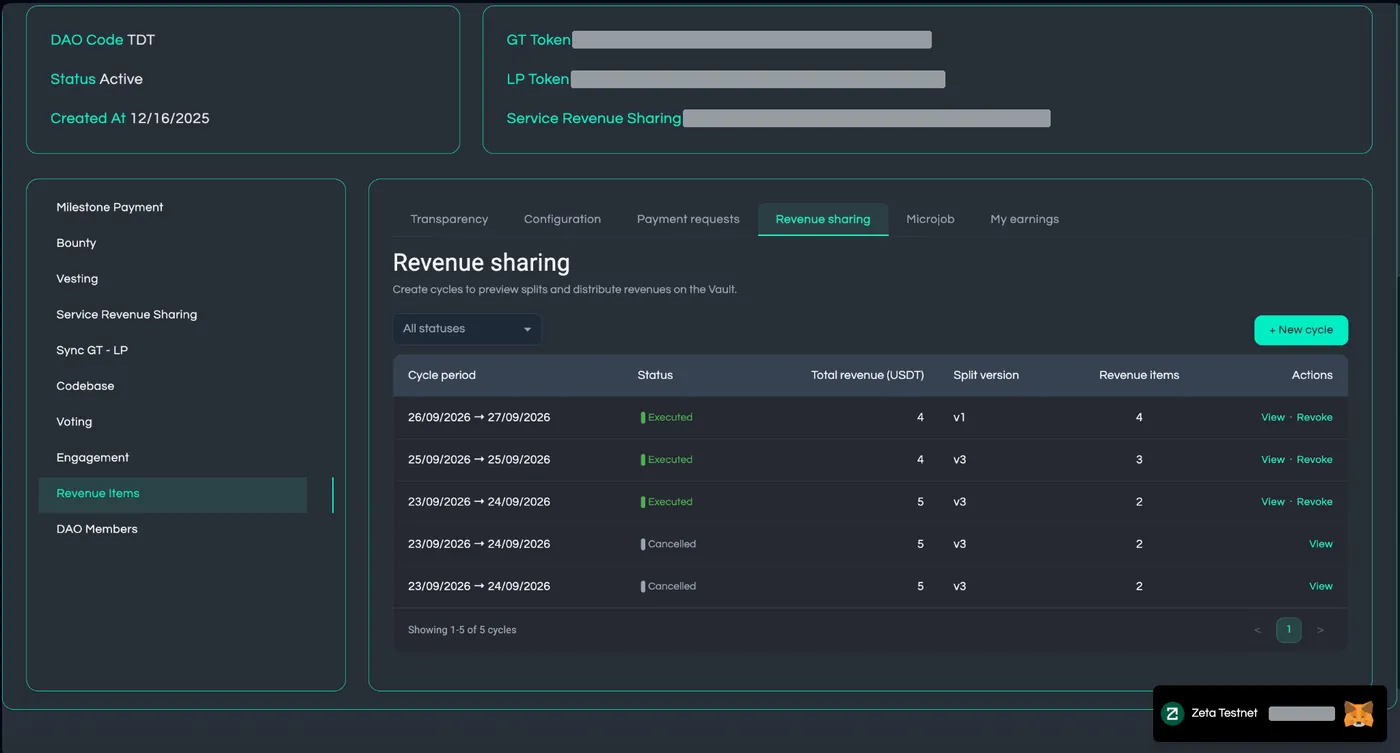
Revenue sharing
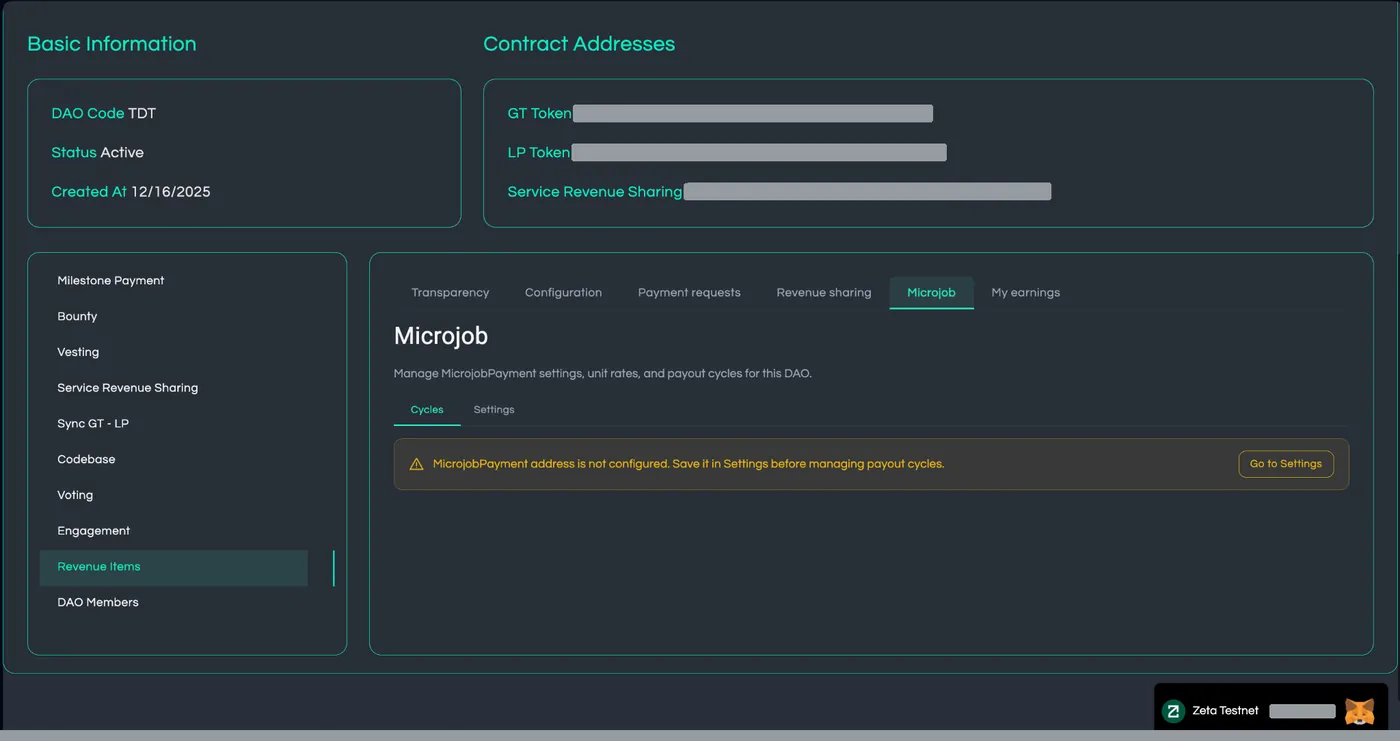
Microjob
My earnings
4. DAO Members (full permission)
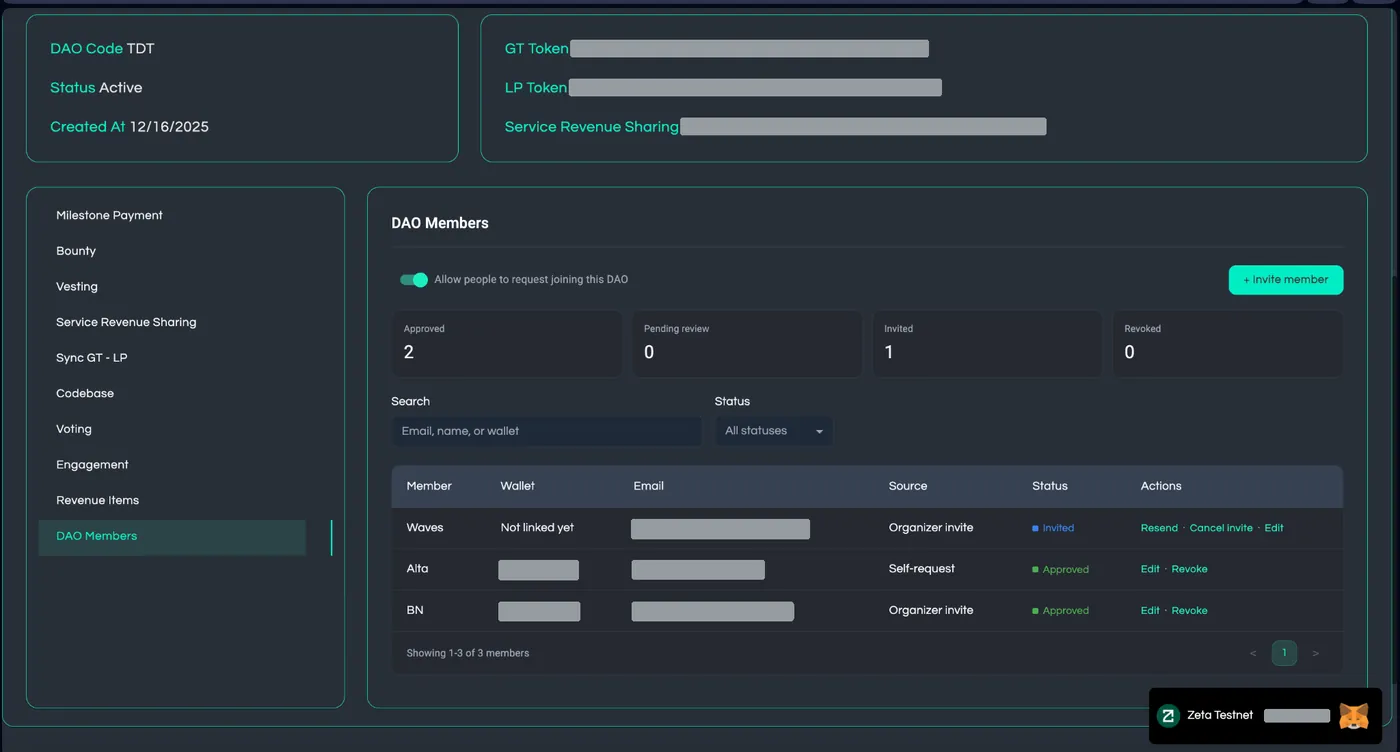
DAO Operator:
1. Milestone Payment (no permission)
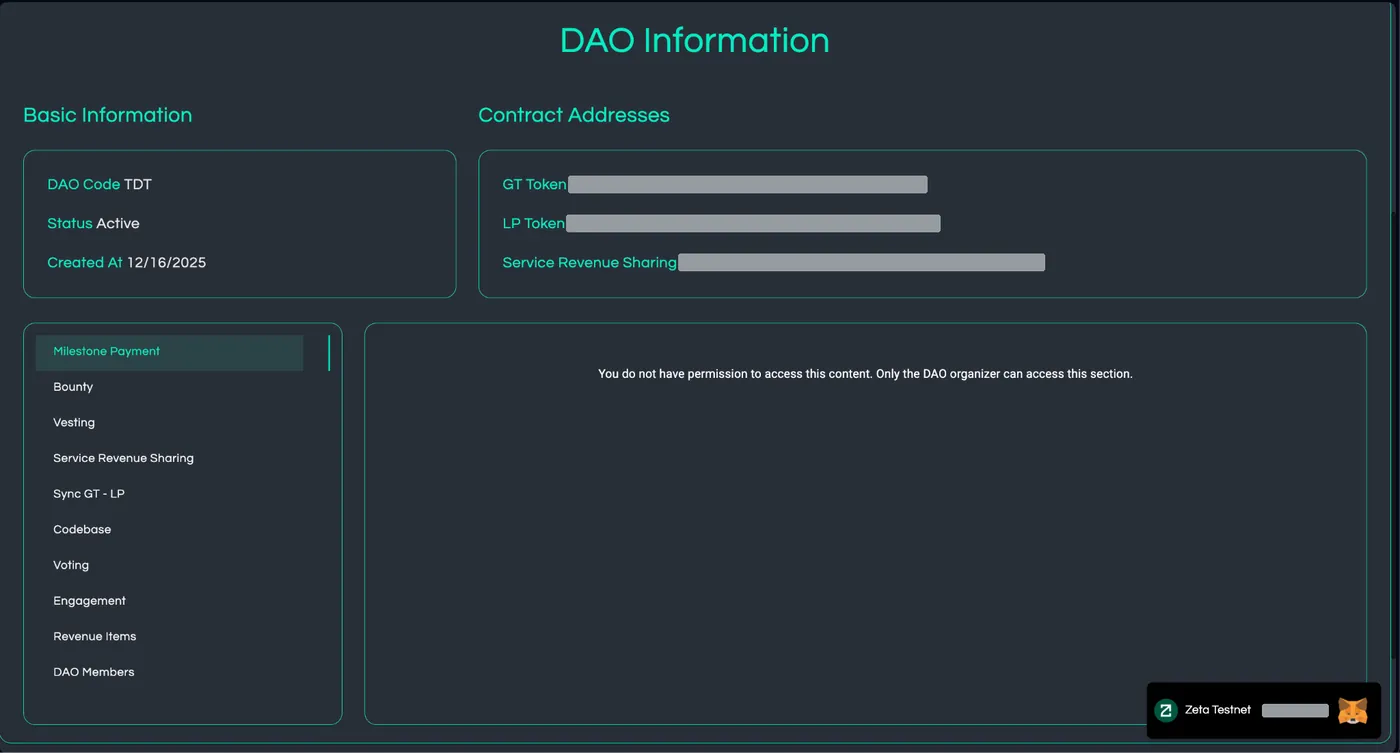
2. Service Revenue Sharing (load data & claim)
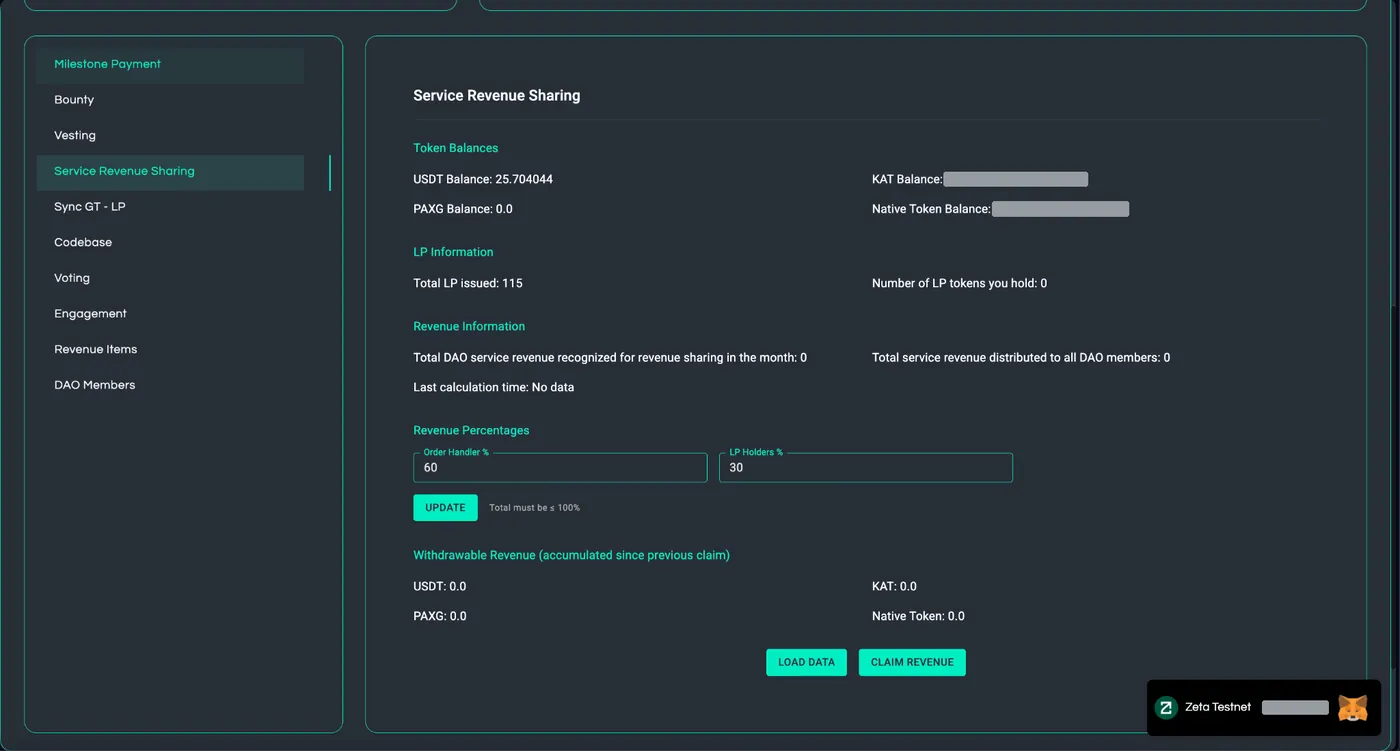
3. Revenue Item (full permission except microjob)
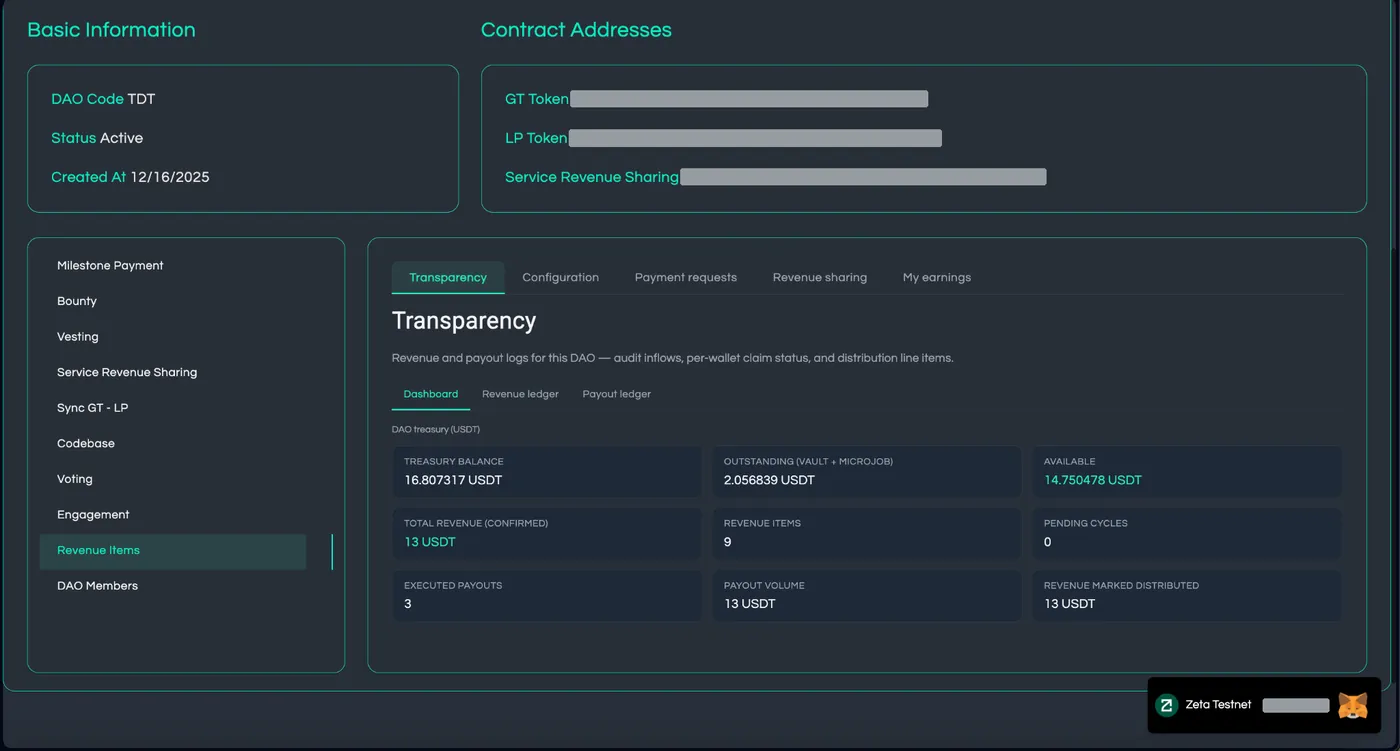
Transparency
Configuration
Payment requests
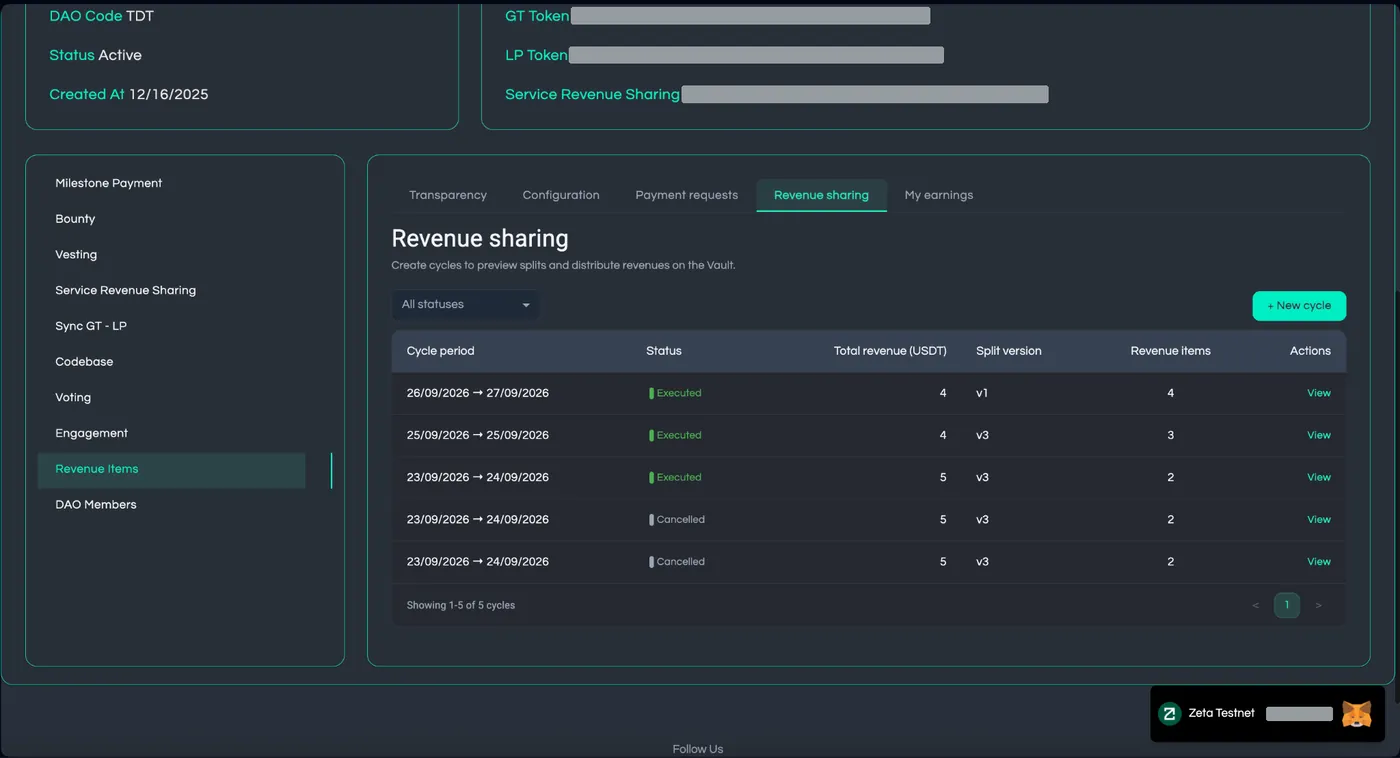
Revenue sharing
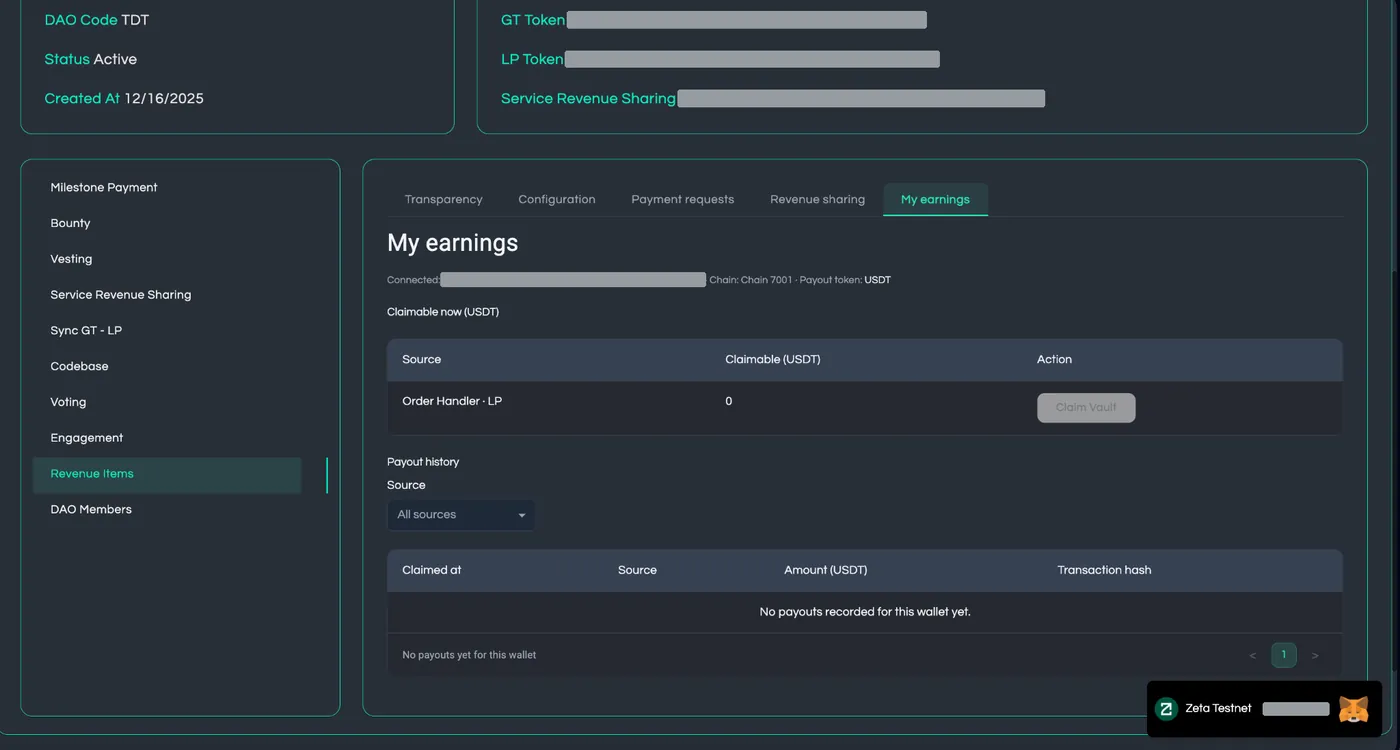
My earnings
4. DAO Members (no permission)
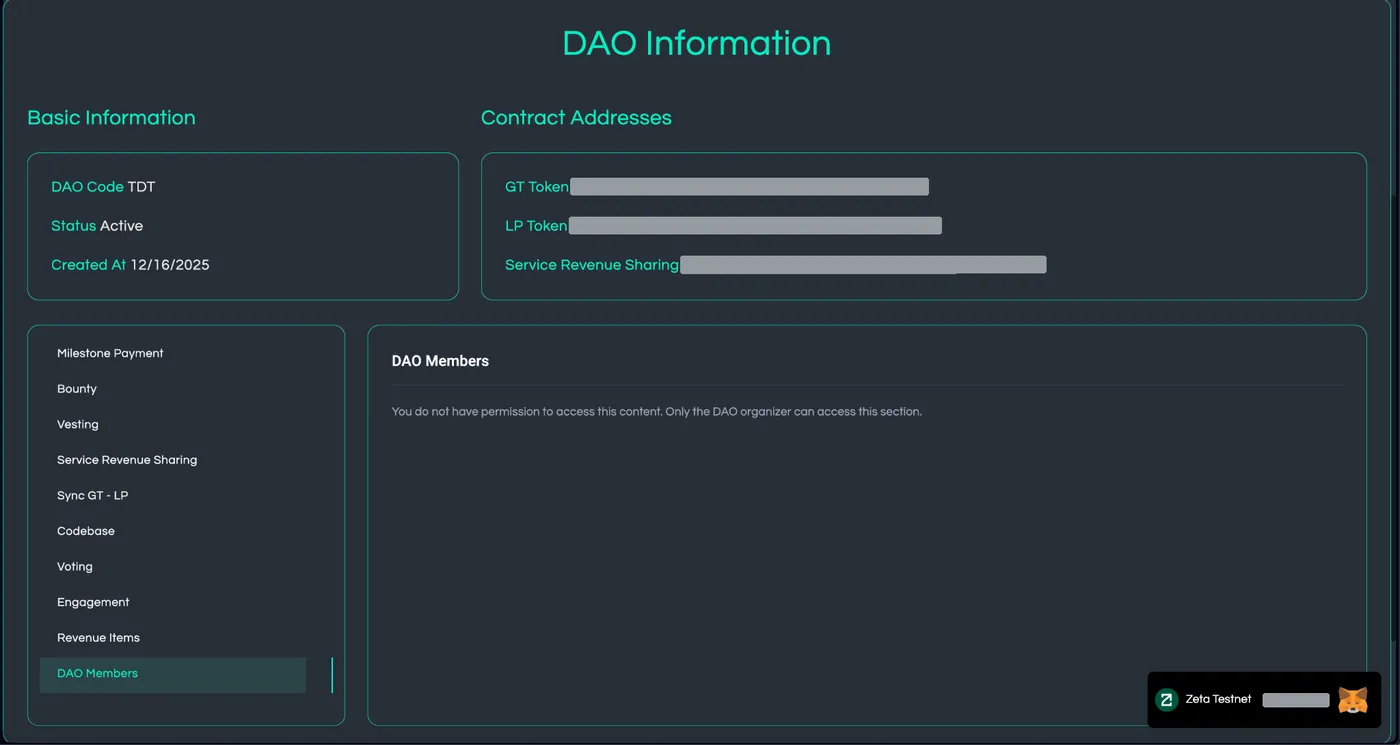
Order Handler:
1. Milestone Payment (no permission)
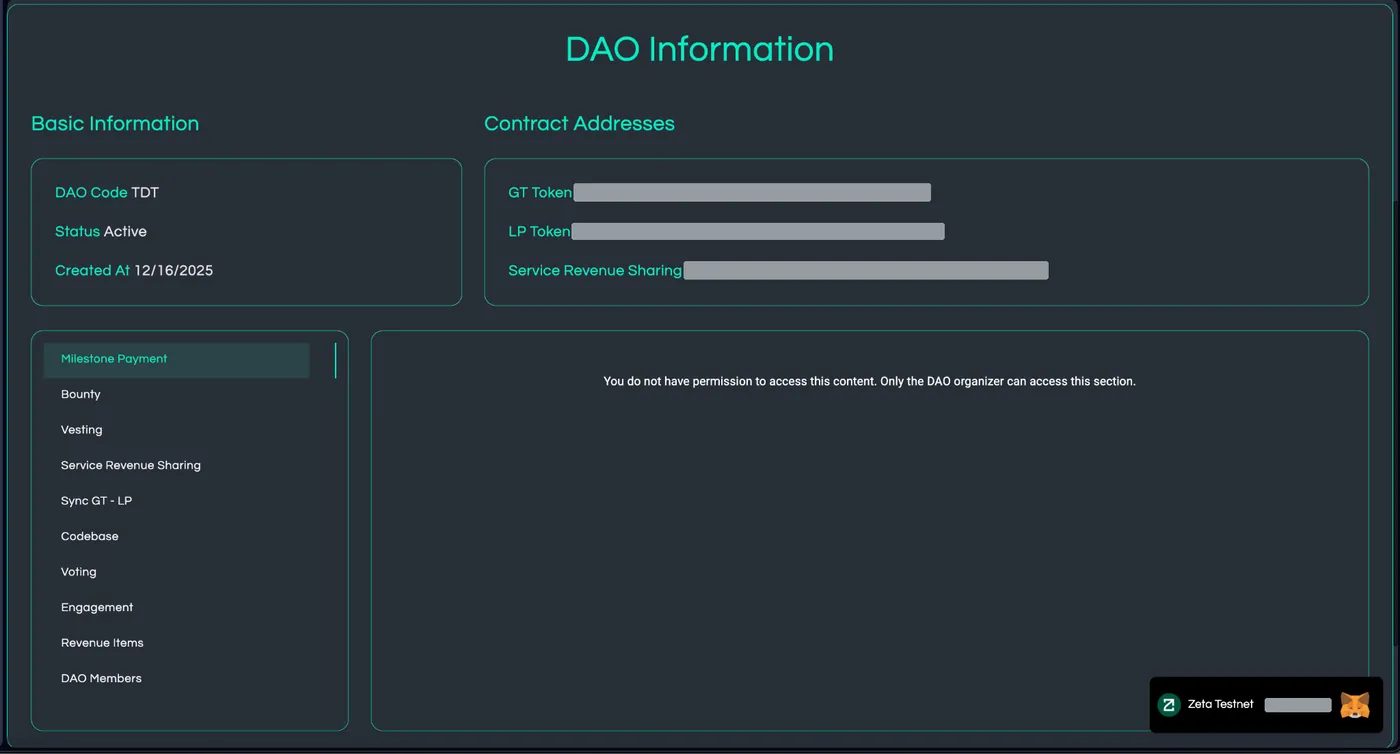
2. Service Revenue Sharing (load data & claim)
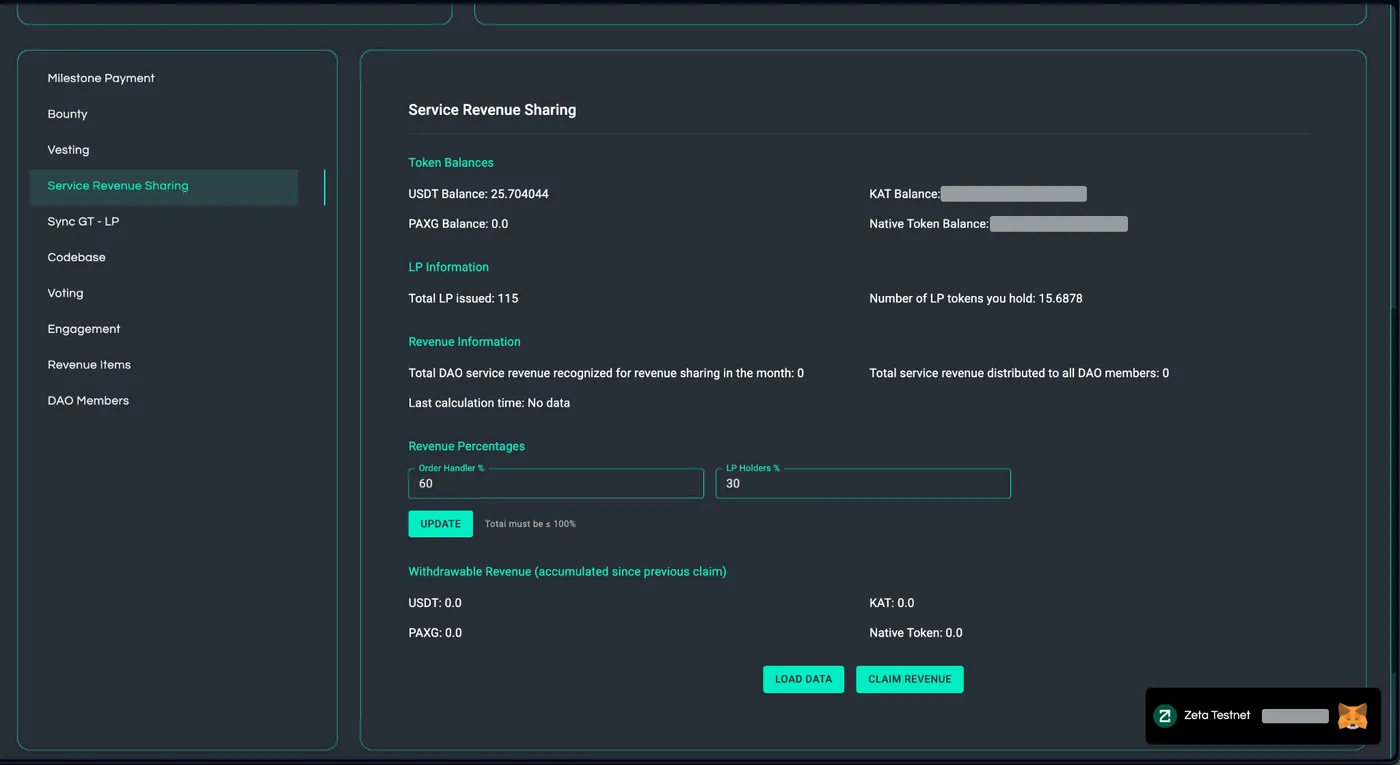
3. Revenue Item (only transparency & payment requests & my earnings)
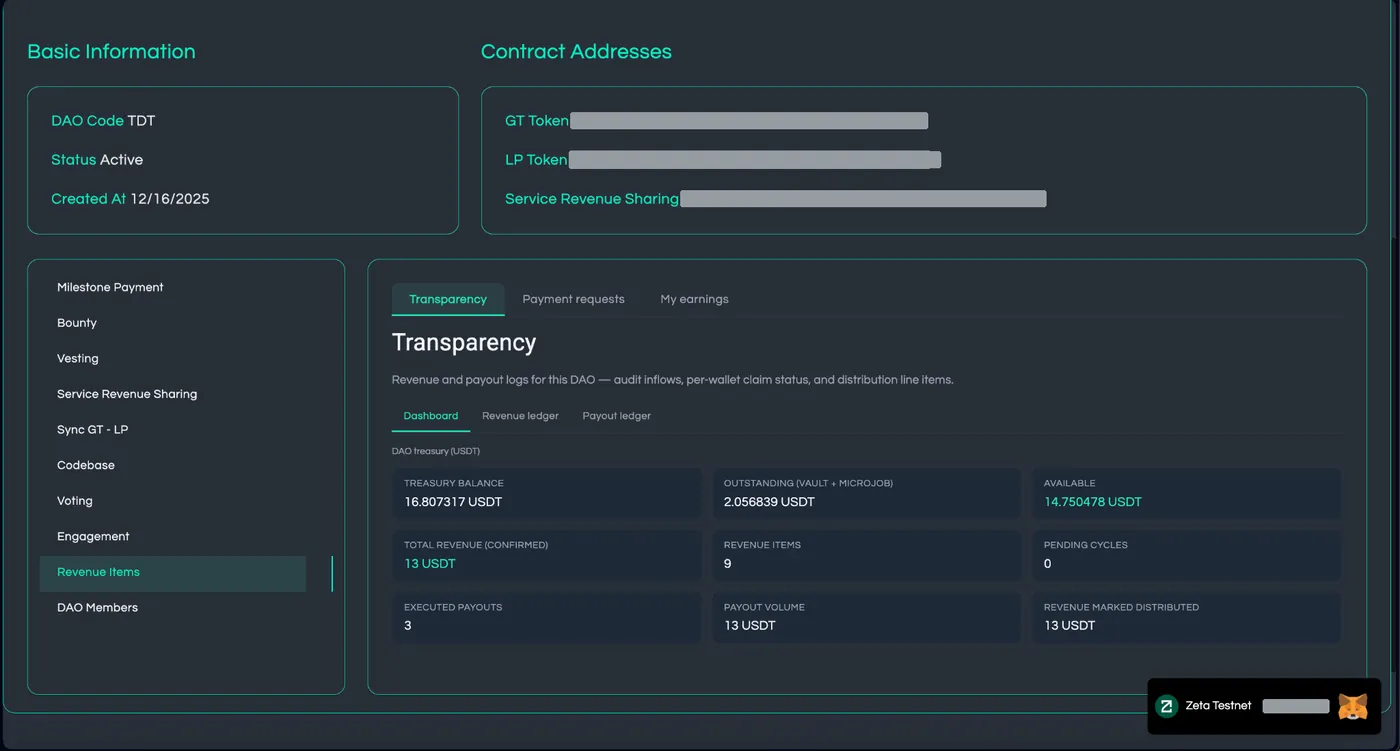
Transparency
Payment requests
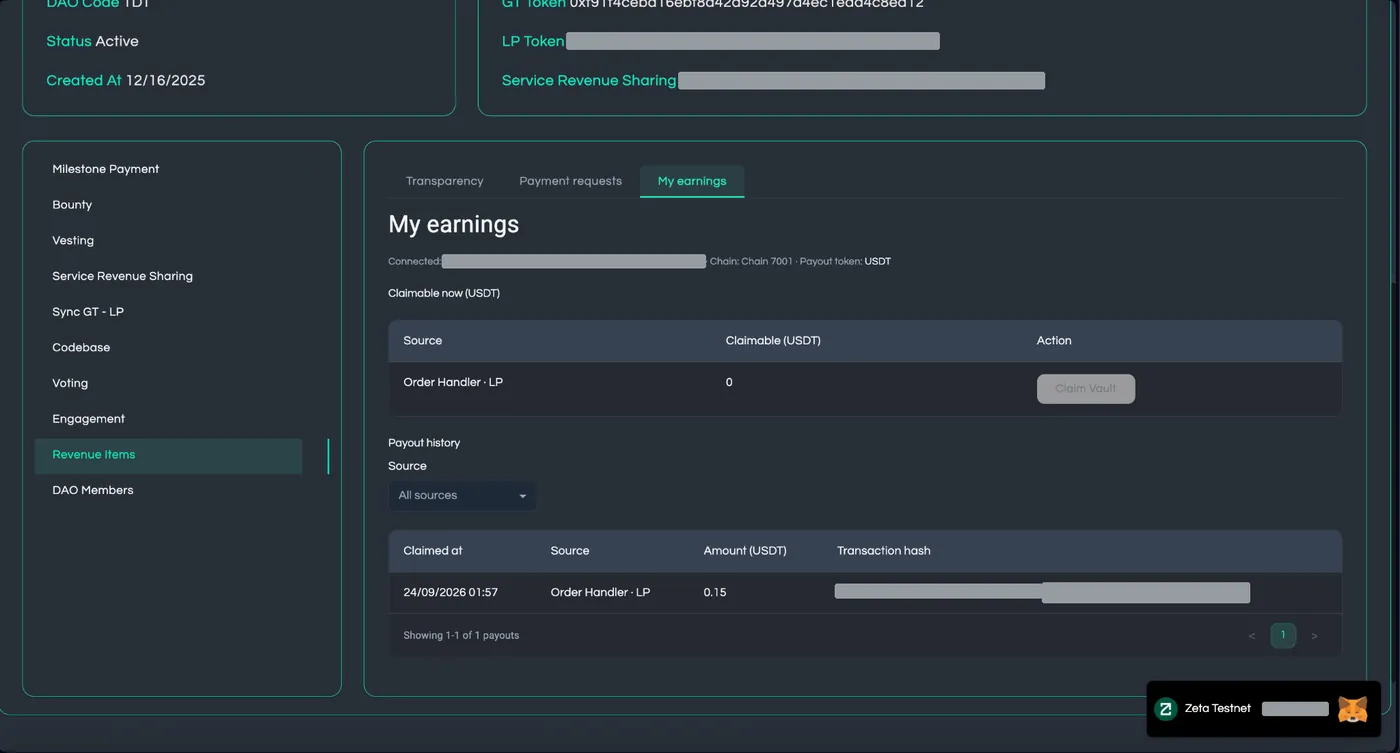
My earnings
4. DAO Members (no permission)
Pages in this part
- Receiving Revenue: Creating a Payment RequestWhen the DAO is about to be paid — for a service or a product — the Order Handler for that order creates a Payment Request. This gives the customer a clean way to pay, and it lets the framework record the revenue…
- Categorisation & Revenue SplitThis page explains what happens to revenue once it's received: how it's labelled, and how it's divided.
- Paying Contributors & Operating CostsOnce a cycle's revenue is split, money leaves the DAO along two different paths, depending on what it's for. Keeping them separate is deliberate — they behave differently.
- Order Handler Revenue SharingSome revenue comes from orders that members handle — and the framework can share revenue with the people who handled them, fairly and automatically, through the Order Handler pool.
- NFT IP AnchoringFor DAOs whose work produces intellectual property — a recipe collection, a piece of creative work, a documented method — the framework can anchor that IP on-chain, so authorship is recorded and verifiable.
- Transparency & ReconciliationThe whole point of running money through the framework is that nobody has to trust a spreadsheet. Everything the framework does is recorded and readable.
- KDF TermsThe words you'll meet in the Kambria DAOs Framework pages, explained simply. They are in learning order: each step builds on the one before, so if you're new, read from the top.