
DEP – Cohort 3
KAT in DEP 3
Not everything that matters in a DAO is a paid task. Welcoming a new member, helping another pair, shaping a proposal, showing up — these keep a DAO alive, and KAT is how they are recognised. This page explains what KAT is and how the Circles DAO uses it. KAT is a secondary layer in DEP 3: it sits outside the Kambria Circles website, which has no tokens or wallets. Contributors on the Circles street are thanked with a lantern on the thank-you tree; KAT recognises the wider contributions of Circles DAO members and collaborators.
What KAT Is
KAT is a symbolic, non-financial recognition token. It is not money and cannot be traded or cashed out. What it records is contribution and standing — a lasting acknowledgement of what someone has given to a DAO and to Kambria over time.
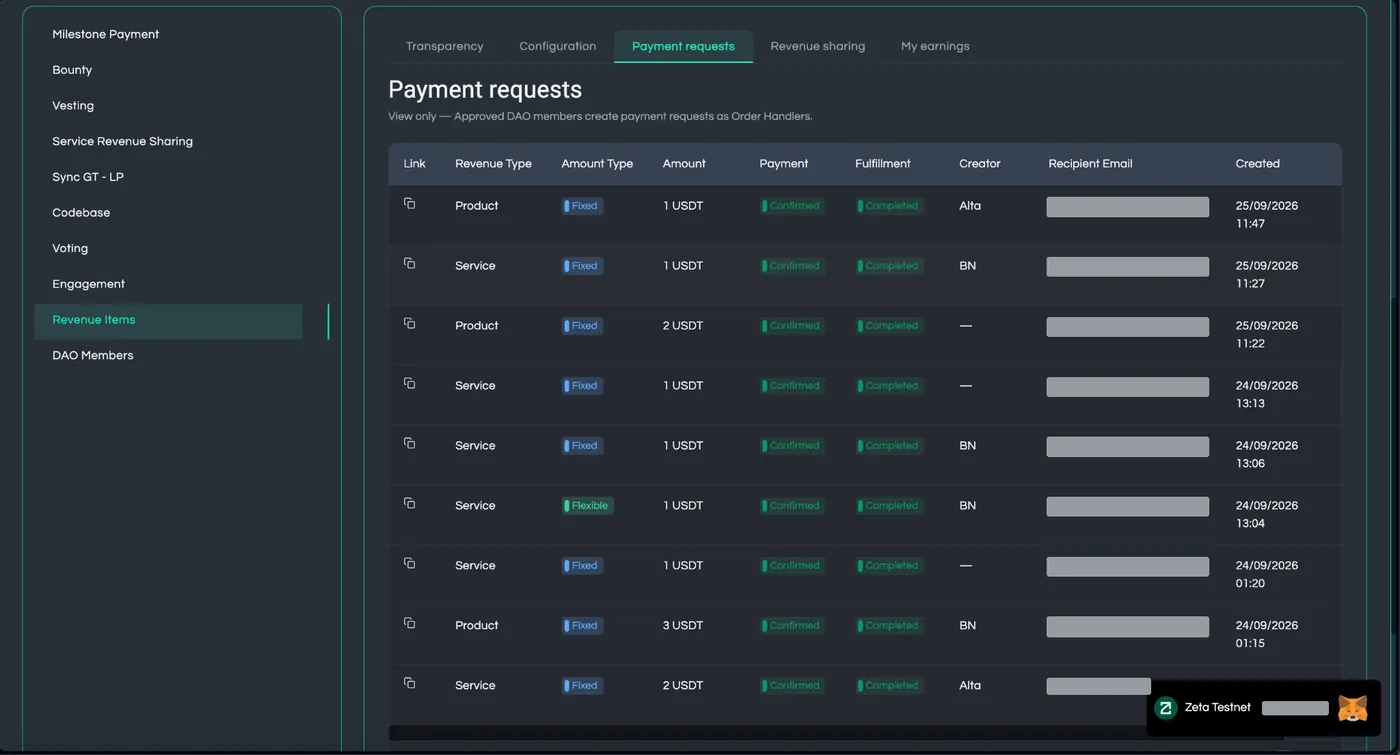
This is the other half of how contribution is recognised in the Circles DAO. A DAO deliverable is paid per task, in USDT, through the Kambria DAOs Framework. Everything valuable that isn't a paid task is recognised with KAT. The two run alongside each other, and both are transparent.
Why This Kind of Recognition Matters
If only paid tasks counted, a DAO would quietly stop valuing the things that hold it together — the quiet help, the encouragement, the person who always shows up. Those contributions are real, and a community that doesn't recognise them tends to lose them.
KAT exists so that this wider generosity is seen and remembered. It is recognition, not payment — and that is the point: some of the most important things people do for each other were never going to be tasks with a price.
How KAT Works, in Brief
KAT runs on the KAT Reward & Privilege Framework 1.0 — Kambria's shared, multi-stakeholder recognition system. At a high level, it turns contributions into standing through a simple chain:
| Step | What it means |
|---|---|
| Contribution | Something a person does that helps the DAO |
| Credits | A record of that contribution, in the DAO's own terms |
| Karma | A measure of standing that builds up from contributions over time |
| KAT | The recognition token itself, carrying tiers and privileges |
The full mechanics of the framework — how credits and karma are defined and calculated, and how tiers and privileges are set — live in the KAT Reward & Privilege Framework 1.0 documentation. This page stays at the level a member needs to take part; the framework docs are there when the detail is needed.
KAT Is Infrastructure in DEP 3
This is what has changed since Cohort 2. In Cohort 2, a dedicated KAT Tokenomics DAO designed the configuration for each DAO and followed its rollout closely, acting as the infrastructure layer for the cohort. In Cohort 3, KAT is settled infrastructure — the framework already exists and is not being redesigned.
Two things follow from that:
Configure, don't design. The KAT Reward & Privilege Framework 1.0 is applied, not reinvented. The Circles DAO configures it for itself — its own contribution types, caps, tiers, and privileges — rather than building recognition from scratch.
The DAO runs it itself. Without a dedicated tokenomics DAO in the middle, the Circles DAO implements and runs KAT itself, under the guidance of its DAO Facilitator. Applying KAT becomes part of a DAO owning its own operations — the same principle as everywhere else in this cohort — with the DF there to guide, not to run it for them.
What KAT Recognises
The Circles DAO decides, through governance, which contributions it recognises and how much weight each carries. As an illustration of the kinds of contribution KAT is meant to capture:
| Kind of contribution | Examples |
|---|---|
| Doing the DAO's work | Running a lane, delivering on a proposal, creating or producing |
| Helping others | Supporting another lane, welcoming a new member, mentoring |
| Holding the DAO together | Taking part in governance, documenting, keeping the community healthy |
| Showing up | Joining the weekly check-in, presenting at the Circles DAO Sync |
This is an illustration, not a fixed schedule. The Circles DAO sets its own recognition configuration; configurations from earlier cohorts (including CED's, from before CED was paused) can be drawn on as a reference.
What KAT Opens Up
KAT is called a Reward and Privilege framework because standing is not only symbolic — it can carry privileges. As a member's KAT and standing grow, a DAO may attach recognition to it: a greater voice in decisions, early access to opportunities, or other privileges the DAO defines for itself, within the framework's rules.
What privileges apply, and at what tiers, is part of the DAO's configuration — set through governance, not handed down.
KAT and Payment Are Separate
It is worth saying once more, plainly, because the two are easy to blur:
Payment is what a Circles DAO member is paid for a DAO task — USDT, through the framework, per task.
KAT is what someone has contributed and the standing they hold — symbolic, non-financial, lasting.
A member might do a paid task and earn KAT for it; they might also earn KAT for something no one would ever have paid for. Keeping the two distinct is what lets a DAO pay fairly for work and, separately, honour the generosity that money was never the right measure for. Neither applies on the Kambria Circles street itself, where contributors are not paid and are thanked with a lantern.